Optimizing Air Disc Brake Performance
While air disc brakes (ADBs) provide significant advantages in performance and maintenance, achieving their full potential depends on consistent and proper care. By adopting specific preventive maintenance practices, fleets and owner-operators can extend the service life of ADB pads and rotors. These straightforward steps help protect the initial investment in ADB technology, ensuring ongoing safety and performance.
Key Highlights
- The friction couple—the critical relationship between the brake pad and rotor—is essential for balanced wear and optimal performance.
- Using like-for-like, Original Equipment (OE) quality replacement parts is strongly recommended to maintain system integrity and stopping power.
- Regular inspections for friction wear are crucial for preserving the life of pads and rotors, even though ADBs do not require routine lubrication.
- Advanced wear-sensing systems provide real-time data that enables proactive maintenance scheduling, helping to prevent costly repairs and unexpected downtime.
Understanding the Friction Couple
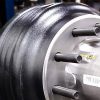
The longevity of Air Disc Brakes hinges on the relationship between the brake pads and the rotor. This friction couple functions as an integrated system, converting the vehicle’s kinetic energy into heat, which is then dissipated. For optimal performance, the rotor’s metallurgy and the pad’s formulation must be precisely matched. OE suppliers like Bendix engineer these components to work in harmony, ensuring not only effective stopping power but also balanced wear that protects the rotor’s life. In contrast, some non-OE pads may offer longer wear at the direct expense of accelerated rotor degradation.
Selecting the Right Replacement Parts
Choosing the correct friction material is vital for maintaining the intended performance of ADBs. Factors such as fleet type, vehicle configuration, and duty cycle determine the most suitable pad. Opting for lower-quality replacement materials can lead to significant performance degradation. It is critical to note that not all aftermarket pads comply with Federal Motor Vehicle Safety Standard (FMVSS) 121, and some have been shown to increase stopping distances. Bendix strongly advises like-for-like replacements to preserve the brake system’s designed integrity.
Furthermore, environmental regulations directly impact part selection. The EPA’s Copper-Free Brake Initiative, effective January 1, 2025, mandates that friction materials contain less than 0.5% copper. In response, Bendix has introduced OE-level pads like the BX277™ to meet these new standards.
The Importance of Regular Inspections
Although ADBs are lubricated for life and lack grease fittings, they still require regular inspections, especially as the friction material approaches its end-of-life. The primary focus of ADB preventive maintenance should be monitoring friction wear to prevent damage to the more costly rotor.
To simplify this process, Bendix provides a pad and rotor wear gauge that allows technicians to measure component thickness without disassembly. For vehicles operating in debris-prone environments, installing ADB pad shields can prevent foreign materials from becoming lodged in the brakes and causing premature damage.
Leveraging Technology for Smarter Maintenance
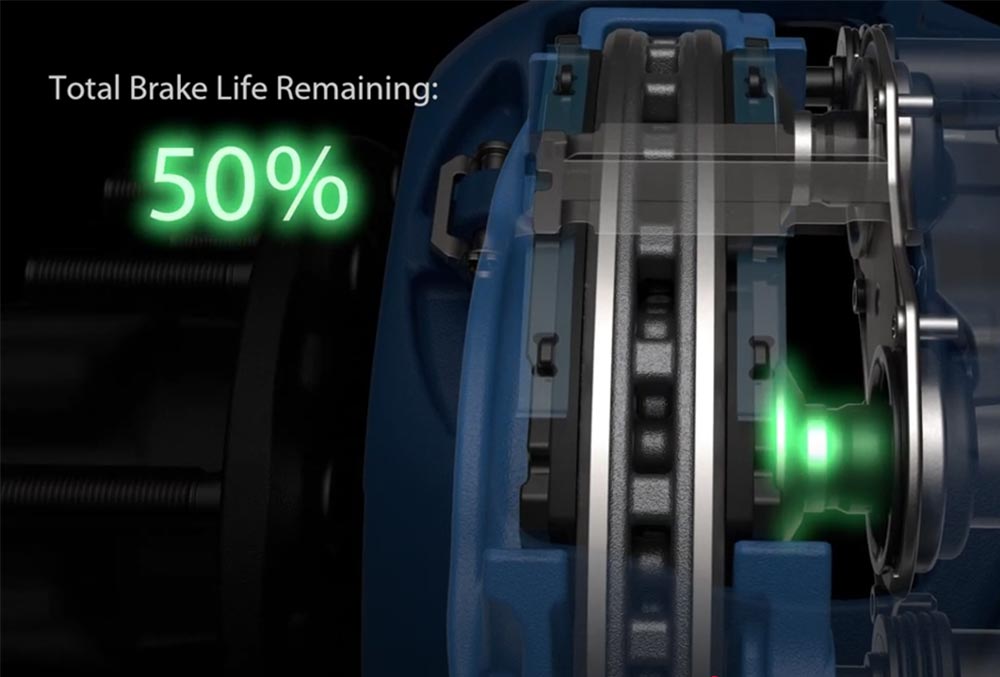
Beyond visual checks, modern technology enables a more proactive, data-driven approach to ADB maintenance. Bendix’s iSense™ and iSense™ Pro brake wear sensing systems provide fleets with real-time insight into brake conditions. The iSense system triggers an alert via telematics when pads are close to requiring replacement.
The more advanced iSense™ Pro system continuously monitors pad and rotor wear at each wheel-end, reporting the remaining life as a percentage. This granular data allows fleets to transition to a proactive maintenance schedule. According to Keith McComsey, Bendix technical sales lead, iSense Pro also enables cross-axle comparisons. A significant wear difference—20% or more—between the two sides of an axle can alert technicians to investigate potential issues, thereby preventing costly damage and downtime. This proactive maintenance also supports the performance of advanced driver assistance systems (ADAS), which rely on proper brake function.
Key Improvements in this version:
- Stronger Introduction: Clearly states the purpose and benefit upfront.
- Improved Flow: Uses transition words and restructures sentences for better readability.
- Active Voice: Employs a more active and engaging tone (e.g., “enables,” “provides”).
- Terminology: Consistently uses key terms like “friction couple” and “proactive maintenance.”
- Clarity and Conciseness: Simplifies complex sentences without losing technical meaning.
- Professional Formatting: Uses bolding and bullet points to enhance scannability, mirroring modern technical documents.